This is an announcement with a link

Two comatose patients were taken off life support. What happened in their brains stunned scientists.

Research into our dying moments can help us understand Near Death Experiences, or even cheat death altogether.

death, dying, science, near death experience, spiritualism
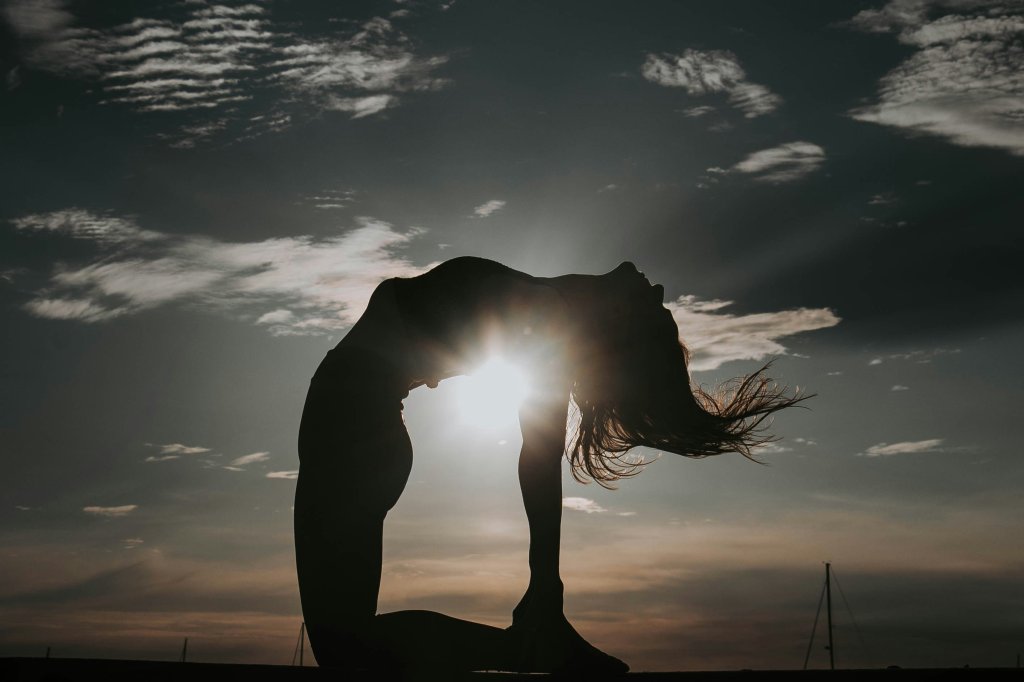
A woman in the sun.Photo credit: Photo by Juliana Araujo the artist on Unsplash

The one thing we all have in common is death. It’s inevitable, and yet it’s under-studied and often overlooked by many in the scientific community, even though it’s the crux (or the bane, depending on who you ask) of existence.

A staggering number of people have reported Near Death Experiences (NDEs) after certain criteria were met. This includes, but is not limited to, seeing a bright light, feeling disassociated from one’s body, and feeling a sense of overwhelming peace. In fact, according to research, studies show that one in ten people report having had a NDE.

More and more researchers are taking notice and using these self-described NDEs as roadmaps for their empirical studies of what physically happens in the brain as we’re dying .

death, dying, near death experiences, science, brain waves
Lord Byron on his death-bed commons.wikimedia.org

Death and dying are a fascinating, perplexing puzzle for doctors and researchers. In 2024 article for The Guardian titled, “The new science of death: ‘There’s something happening in the brain that makes no sense,’” author Alex Blasdel discusses the focused curiosity Jimo Borjigin, Ph.D., a professor of neurology at the University of Michigan, has on the topic. “She had read about the near-death experiences of certain cardiac-arrest survivors who had undergone extraordinary psychic journeys before being resuscitated. Sometimes, these people reported travelling outside of their bodies towards overwhelming sources of light where they were greeted by dead relatives. Others spoke of coming to a new understanding of their lives, or encountering beings of profound goodness.”

The thing of it is, one doesn’t have to have a belief in a “higher” power to experience these events. A self-described atheist has given many talks and interviews about her experience.

Borjigin was a skeptic but began to investigate. In a 2023 piece for Michigan Medicine, lead research editor Kelly Malcolm writes that Borjigin led the study for The Proceedings of the National Academy of Science. She and her team found two patients who “upon removal of ventilator support, showed an increase in heart rate along with a surge of gamma wave activity, considered the fastest brain activity and associated with consciousness.”

Altered states, indeed. To get more specific, when one of the patients (referred to as Patient One) was taken off life support, something extraordinary happened. Blasdel reports, “In the moments after Patient One was taken off oxygen, there was a surge of activity in her dying brain. Areas that had been nearly silent while she was on life support suddenly thrummed with high-frequency electrical signals called gamma waves. In particular, the parts of the brain that scientists consider a ‘hot zone’ for consciousness became dramatically alive.”

It gets even more fascinating. Blasdel continues, “For about two minutes after her (Patient One’s) oxygen was cut off, there was an intense synchronisation of her brain waves, a state associated with many cognitive functions, including heightened attention and memory. The synchronisation dampened for about 18 seconds, then intensified again for more than four minutes. It faded for a minute, then came back for a third time.”

In other words, the patient’s life may have flashed before their eyes, as the cliché goes. Unfortunately, Patient One didn’t recover, but based on the brain waves, it’s likely they experienced a cacophony of neurotransmitters exploding into light, guiding them through tunnels of memories. Maybe?

Upworthy spoke with Dr. Elreacy Dock, DBH, D.Th., Certified Grief Educator, and Adjunct Professor of Thanatology. She shares that NDEs have actually been reported in about 17 percent of patients, with a notable amount coming from cardiac arrest survivors. The why of it is much more tricky. “Theories as to why they may occur, which range from the possibility of cerebral anoxia and a significant release of neurotransmitters to other alternatives such as having consciousness independent of the brain.”

brain, mind, life, death, research
A plasticu00a0model of au00a0brain. Photo by Lisa Yount on Unsplash

Furthermore, there are probably a lot more that aren’t even talked about than we even know. “It has been argued that NDEs are far more prevalent than documented and that some remain unreported because people have difficulty recalling NDEs due to trauma, heavy sedation or medication use, and impaired memory,” Dock concludes.

Dock reiterates that, “Some researchers believe that these waves may reflect a ‘life recall’ process that is similar to what some individuals have mentioned encountering in near-death experiences (e.g., a life review). Studies have also shown that when near-death experiencers have recalled their memories of these experiences, these were associated with delta and theta brain waves. These are generally attributed to trance states, episodic memory, and recollection of past events, which makes these NDE memories distinguishable as actual experiences rather than imagined experiences.”

The idea being that the patient who can recall their NDE isn’t making it up. Their brain waves prove that their experience, no matter what it’s attributed to, was very real to them and not a fictionalized part of their imagination.

She also notes, as have many researchers, that while these NDEs are often reported as positive, that’s not always the case. “It is not uncommon for individuals to report negative experiences, some of which have also been said to influence an increase in suicidal ideation among those who have made previous attempts.”

This is discussed at length in Netflix’s docuseries Surviving Death, which ran the gamut of emotions from those who experienced NDEs and lived to tell about them. Some saw it as a spiritual awakening, while others were merely baffled by how odd the experience was. Many had beautiful sensations to report, while others felt darkness and fear. Much like life itself, our experience with death sounds pretty personalized.

As Blasdel writes, “Death may be far more alive than we ever thought possible.”

  • Wall-mounted dish drying racks have suddenly become the new must-have item for family kitchens
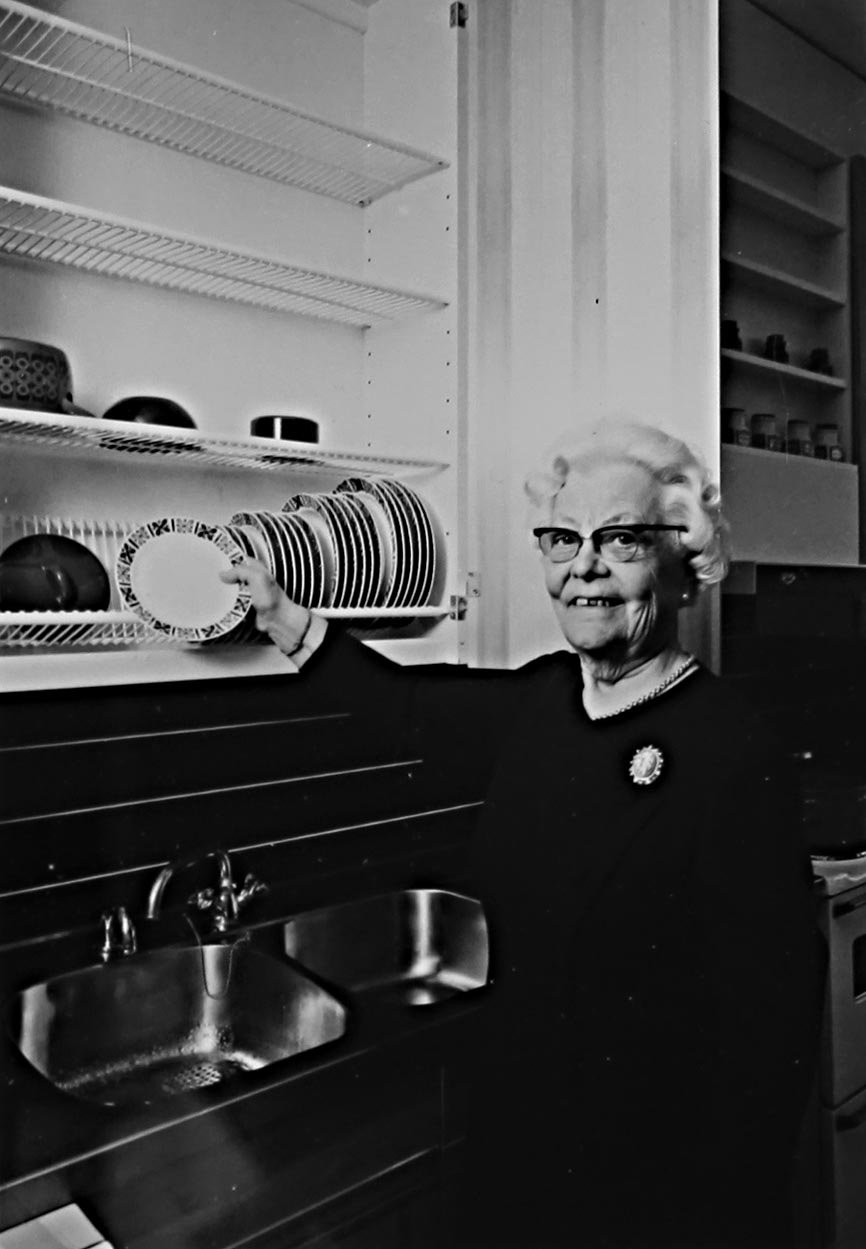
    Maiju Gebhard with her dish-drying racksPhoto credit: commons.wikimedia.org
    ,

    Wall-mounted dish drying racks have suddenly become the new must-have item for family kitchens

    Five reasons why America is falling in love with this old-school kitchen essential.

    Just like hemlines for jeans and living room paint colors, trends come and go like the wind. But sometimes, even trends steeped in pure logic that genuinely make life easier take a while to gain traction all around the world. Such is the case for the wall-mounted dish drying racks, which are finally becoming a staple in kitchens in the globe’s last outlier—America.

    While there had been earlier patents, it wasn’t until the 1940s when Finnish inventor Maiju Gebhard popularized the idea of the wall-mounted dish drying rack, known in Finland as astiankuivauskaappi. The idea is simple: instead of a drying rack in your sink or on the kitchen counter, this one is mounted directly above the sink in a closed or open cabinet with an open-ended bottom, allowing water to drip, and plates, etc. to properly air dry.

    In an article about Nordic inventions for 99 Percent Invisible (99pi), writer Kurt Kohlstedt notes that Gebhard’s design, “in conjunction with the Finnish Association for Work Efficiency, was a huge success. Her basic design is widely used in Finnish kitchens to this day. Over time, older versions built with wood have been replaced by ones using metal wire and/or plastic.”

    In David Cad’s TikTok video, he illustrates what it might be like for a “foreigner to see astiankuivauskaappi” for the first time. “Who else knows about this?” he jokes. His counterpart answers, “What? This is in like every Finnish home.”

    The video has garnered nearly half a million likes and has comments from all over the world.

    An American writes, “I live in a New York City apartment and I would kill to have that much cabinet storage space.”

    One TikToker notes, “Come to Singapore. You’ll find this in almost every home.”

    Many living in Europe also vouch for them. From Italy to Romania to Spain, people chime in to share that this has been the standard for quite some time. A person in Poland claims, “Very popular in Poland, with a tray under the cabinet to avoid drops on the counter.”

    In the Middle East, someone asks, “Is this a thing? It’s a basic here in the Middle East.” To that point, another adds, “It’s in Saudi Arabia and we improved it by making it slide down so you can stack on the upper shelf and then slide it back up.”

    It has taken a while for the West to catch up on this invention, but it’s finally happening and better late than never. It makes so much sense and here are a few reasons why:

    More hygienic

    On traditional counter or sink-based drying racks, moisture can get trapped, leading to unsanitary conditions. And you know who loves those? Bugs and bacteria. When the rack is raised up, the airflow is better, which results in a cleaner dish and all-around more hygienic kitchen.

    Dries dishes faster

    With more efficient airflow comes faster-drying dishes. It’s just science.

    Saves energy and money

    If you’re using a dishwasher to wash and dry your dishes, you’re using (on average) about 1800 watts of energy per cycle. This isn’t outrageous, but one can still save money and precious energy by skipping the appliance and washing and drying the old-fashioned way.

    Looks clean and cool

    Stacked plates and glasses on the countertop can make kitchens seem messy. This mounted drying system eases up the visual clutter and gives at least some illusion of organization.

    Frees up space

    When your kitchen countertop is littered with an old-fashioned drying rack, then it takes up much-need space for cutting limes or whisking up cake batter. Opening it up will make a lot of difference, both for your visual aesthetics and practical purposes.


    If you’re ready to take the leap and are looking for options, Wayfair has dishrack drainer shelves, that are sleek and useful.

    Also, the Asieit over-the-sink dish drying rack seems popular and affordable. It’s an alternative to actually mounting the rack, as it’s placed over the sink with extra storage on top.

    To take it a step further, a mounted utensil rack adds a bit of pizzazz to the kitchen and again, gives much needed extra space. While it’s not a drying mechanism, per se, it could be used as one if a tray is placed underneath.


  • People with ‘spiky’ names are less likely to get job interviews. Do you have one?
    People lined up for job interviews.Photo credit: via Canva/Photos

    There have been many studies in the past that show people face a lot of bias when they turn in a job application. A 2021 study found that job applicants who had “Black-sounding” names were nine percent less likely to get a call back than those whose names sounded “white.” People who review resumes are also looking for subtle clues of social class.

    A 2016 Yale study found that men who appear to be upper-class in job applications fare much better than women of the same class when applying to elite positions. However, lower-class women perform better than lower-class men in the same process. Unfortunately, sex, race, and class bias are significant issues when it comes to hiring, but another prejudice has nothing to do with inherent characteristics: the way your name sounds can make a big difference when you send in a job application.

    Do people judge job applications based on your name?

    A recent study carried out by The Conversation found that people attribute personality characteristics to people based on whether their name sounds “smooth” or “spiky.” The researchers designed a job ad looking for a candidate high in one of six personality factors: honesty/humility, emotionality, extroversion, agreeableness, conscientiousness (how organized or hard-working someone is), and openness to experience.

    spiky names, job interview, job application, job candidates, resumes, waiting,
    People lined up for job interviews. u200bvia Canva/Photos

    The researchers sent in applications with people who had smooth-sounding names with sonorant consonants (l, m, n), and the others were spiky with voiceless stops (p, t, k).

    Some examples of smooth names (sonorant consonants) include: Joanna, June, Norah, Allen, Linus, and Moses.

    Some examples of spiky names (voiceless stops) include: Rita, Erica, Tia, Kurt, and Victor.

    The researchers found that individuals with smooth-sounding names were perceived as more agreeable and emotional, whereas those with spikier names were seen as more extroverted. So, if people are hiring for a job where they were looking for agreeable characteristics, those with smooth-sounding names had a better chance of getting the gig.

    Interestingly, according to researchers, the way a name sounds has nothing to do with someone’s personality. In real life, Lou and Erica may be just as agreeable as one another. But when hiring managers are just looking at names, Lou gets the gig.

    What is sound symbolism?

    The idea that the sound of a word can make it feel aligned with particular qualities is known as sound symbolism. It’s why we often say that so-and-so looks like an Emma or a Charles. A popular study on the phenomenon known as the Bouba / Kiki effect found that when given the two names Kiki (spiky) and Bouba (smooth), they are much more likely to call the figure on the left Kiki and the one on the right Bouba. Although researchers don’t know the exact reason why we map certain sounds to specific shapes, they believe it may reflect how we move our mouths to make those sounds.

    bouba kiki, bouba kiki effect, shapes, sounds and shapes, sound symbolism,
    The Bouba /u00a0Kiki effect. via Wikimedia Commons

    “The rounded shape may most commonly be named ‘Bouba’ because the mouth makes a more rounded shape to produce that sound, while a more taut, angular mouth shape is needed to make the sounds in ‘Kiki.’ Alternatively, the distinction may be between coronal or dorsal consonants like /k/ and labial consonants like /b/,” researchers at Mind Modeling wrote.

    The study may reveal that there’s one more thing many of us have to worry about when applying for a job. But it’s also a reminder that we all have some sort of bias, and next time we see a name without knowing the person, we may be judging them based on criteria that doesn’t reflect who they are. Much like it’s wrong to judge a book by its cover, judging someone by their name may mean you miss out on someone truly wonderful.

Health

‘Fear-setting’: How a bestselling author conquers anxiety by writing down worst nightmares

Health

Doctor’s unique ‘4-7-8’ relaxation technique could help you fall asleep on-demand

Joy

Dogs really do have favorite people, and here’s how they decide who it will be

Music

Ethan Hawke puts the ‘Who’s your favorite Beatle?’ debate to bed forever in passionate exchange