This is an announcement with a link

California brought back beavers for the first time in 70 years, and the results are already amazing

Native wisdom and ancient rock paintings save the day.

beaver, project, california, environment, sustainability
Photo credit: Canva and CDFW.Checking in on California's beaver project.

Deep in the Sierra Nevada foothills on the Tule River Indian Reservation, tribal member Kenneth McDarment had passed by an ochre-red pictograph countless times throughout his life—a simple yet unmistakable image of a beaver with four paws and a distinctive paddle tail. Estimated to be between 500 and 1,000 years old, this ancient artwork adorned the walls of a rock shelter alongside other paintings of wildlife, humans, and geometric designs created by the Yokuts people.

To McDarment, this beaver image seemed like just another beautiful piece of Native art. That is until he looked at it again—this time seeing it clearly with fresh eyes.

beaver, project, california, environment, sustainability
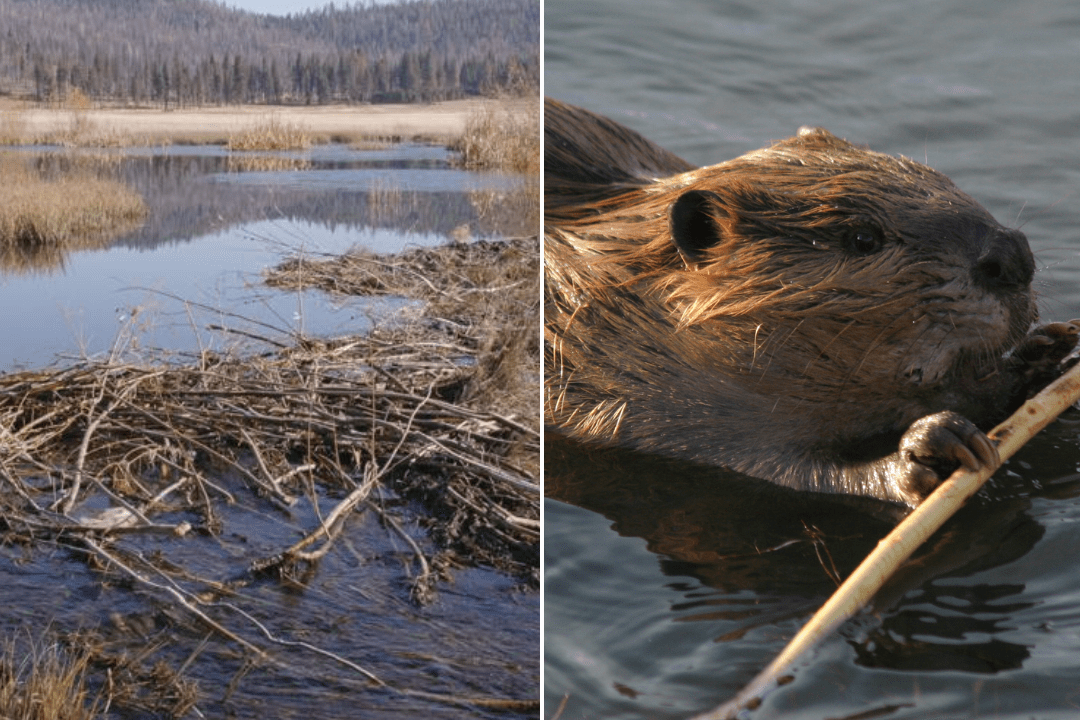
Newly introduced beaver swimming through the water. Credit: CDFW

When severe drought struck the reservation about a decade ago, McDarment and other tribal leaders began searching for innovative ways to conserve water. The answer, it turned out, had been staring at them from the cave walls all along.

“Sometimes you need to just look at things more often,” McDarment told researchers.

Glancing back up at the beaver, the pictograph suddenly took on new meaning as McDarment and the other tribal leaders began to recognize the ancient wisdom embedded in their ancestors’ art. If beavers had once thrived on these lands and helped manage water resources, perhaps bringing them back could address their contemporary drought challenges. This revelation prompted the tribe to pursue what would become California’s first beaver restoration program in over seven decades.

From ancient wisdom to modern partnership

The revelation sparked an unprecedented collaboration between California’s Department of Fish and Wildlife (CDFW) and Native tribes. In the past, the Tule River Tribe and the Maidu Summit Consortium were dismissed, and told there was “no way to move beavers in California legally.”

But after years of advocacy and preparation, in 2021, California finally launched its first beaver restoration program since the 1950s in partnership with both tribes.

On October 18, 2023, seven beavers were released into their new home in Tásmam Koyóm, a 2,325-acre valley in Plumas County.

“You just saw this tiny brown furball, this little nugget, catch a ride on the back of his sibling’s tail, and it looked like he was surfing. I don’t think it set in for days afterward, but that moment will go down as one of the highlights of my entire career. I think we were very proud of what we had done, and really optimistic about the potential that this represents for us and the good we think we can do moving forward.” – Valerie Cook, the beaver restoration program manager for the CDFW.


beaver, project, california, environment, sustainability
Beavers being released to explore their new territory. Credit: CDFW

Where did they find the beavers? Set a few traps and catch as many as they could? No. The efforts presented in this project represented a fundamental shift in how California approaches wildlife management and water conservation. The beaver relocation process involved identifying “problem” beavers in areas where they caused flooding, and then safely transporting them to new locations where their engineering skills could work environmental magic. For the first time in nearly 75 years, the state began relocating beavers.

“We can make our future different from our past,” declared CDFW Director Charlton H. Bonham during the historic first release. “Our past is one where we treated these animals and others as varmints, as nuisances, and our culture over time ran them off the landscape. That can’t be our future”.

Nature’s ultimate engineers get to work

The results have been nothing short of spectacular. At the Maidu Summit Consortium’s Tásmam Koyóm meadow—which means “tall grass” in the Mountain Maidu language—relocated beavers have constructed an impressive 328-foot dam, effectively creating a massive wetland complex that has increased water coverage by more than 22% according to CDFW’s April 2025 report.

beaver, project, california, environment, sustainability
Dams like these offer shelter, a safe home for beavers, and food storage. Image by John Cannon/Mongabay.

“They are really powerful ecosystem engineers,” Emily Fairfax, an assistant professor of geography at the University of Minnesota, told Mongabay. “The number of services they provide to us and ways that they build resilient landscapes is honestly too much to just rattle off all at once.”

The benefits extend far beyond water storage, with those furry “ecosystem engineers” essentially transforming the landscape into a climate-resilient powerhouse:

Cultural reconnection and sovereignty

For the Mountain Maidu and Tule River tribes, the beaver restoration represents much more than environmental conservation—it’s a symbol of just how far they’ve come in reclaiming their relationship to the land. Nearly two centuries ago, Tásmam Koyóm Meadow was forcibly taken from the Mountain Maidu tribe and was not rightfully returned until 2019. Four years later, the beaver—which the Mountain Maidu call hi-chi-hi-nem and consider as family—finally returned to their land, marking a moment of healing and deeply profound spiritual significance.

Shannon Salem Williams, a Mountain Maidu program manager, said seeing the beavers slip into the water was a “full circle moment.” Then added, “It was like a big welcoming home.”

A blueprint for climate resilience

The success story of California’s beaver restoration program proves that sometimes, the most efficient solution to modern issues is simply to return to ancient wisdom.

With climate change intensifying droughts, floods, and wildfires across the American West, beaver-based restoration is gaining recognition as a cost-effective, nature-based solution. The California program has become so successful that Governor Gavin Newsom signed legislation in 2024 to make the beaver restoration program permanent.

Scientists and activists remain hopeful that this trend will continue. “I think we’re in kind of an idyllic [stage of] beaver literacy,” advocate Heidi Perryman said. “People have begun to hear a lot of good things about beavers, and they’re very hopeful that beavers can fix everything that we’ve messed up.”

  • Doctor’s unique ‘4-7-8’ relaxation technique could help you fall asleep on-demand
    Photo credit: via Andrea Piacquadio/PexelsThe 4-7-8 technique can help you fall asleep.

    Here’s a rhetorical, but important question: Are you having a hard time falling asleep? If so, you’re not the only one. Falling and staying asleep typically becomes more difficult as adults get older. We spend less time in deep sleep and REM sleep, and we struggle to fight off our worries and anxieties while lying in silence. Did you know there’s actually a name for the phenomenon where you keep yourself awake by lying there and wondering why you’re still awake? It’s called “spectatoring” and it’s incredibly frustrating.

    Worse yet, the older we get the more likely we are to wake in the night and have trouble falling back asleep. This is why more and more Americans are turning to white noise, melatonin, meditation apps, special pillows, and anything they think can help them get most rest.

    Fortunately, a doctor has shared the “most powerful” relaxation technique he knows, and it doesn’t require any equipment or cost a dime.


    sleep, dr. andrew weil, fall asleep fast, relaxation techniques, breathing techniques, calm, anxiety, science, meditation
    Ever stare at the clock and repeatedly wonder why you can't fall asleep? It's called Photo by Mpho Mojapelo on Unsplash

    Dr. Andrew Weil has dubbed it the 4-7-8 method and it’s backed up by science.

    Dr. Weil is an expert in integrative medicine and the founder and director of the Andrew Weil Center for Integrative Medicine at the University of Arizona.

    The technique is simple:

    1. Breathe in through your nose while you count to 4.
    2. Hold your breath while you count to 7.
    3. Exhale while you count to 8.

    It’s a unique protocol, especially when compared to another popular technique like Box Breathing. Box Breathing calls for an inhale, hold, exhale, and another hold of equal time (4 seconds). The extended exhale, in particular, is what makes Dr. Weil’s 4-7-8 so original.

    Here’s Dr. Weil explaining his method:

    Dr. Weil says the method creates a “very pleasant, altered state of consciousness” that you may not experience the first time but will come as a “reward” of regular practice. Dr. Weil insists that the 4-7-8 technique is a practice, and you must do four breath cycles at least twice a day to get the benefits. “After a month, you can increase to 8 breath cycles if you’re comfortable with it,” adding that’s the “absolute maximum.”

    Dr. Weil says that 4 to 6 weeks of doing the practice can lower heart rate, improve blood pressure, digestion and circulation and can promote sleep. A study published in Physiological Reports agrees, saying that practicing the 4-7-8 technique reduces heart rate and blood pressure for several minutes. It’s important to note, though, that research is limited on the longterm benefits of 4-7-8 and experts urge us not to overhype it as more than it is.

    4-7-8 is also an easy, fast, and effective way to help you fall asleep.


    sleep, dr. andrew weil, fall asleep fast, relaxation techniques, breathing techniques, calm, anxiety, science, meditation
    Deep, intentional breathing may jumpstart melatonin production, helping us sleep. Photo by Alexander Grey on Unsplash

    “If you get up in the middle of the night for any reason, it is the most effective anti-anxiety technique that I’ve found,” Dr. Weil says.

    Deep breathing, interestingly enough, has been shown to increase melatonin production in our bodies; that’s the hormone that signals to our body that it’s time to sleep. Combined with its ability to calm our mind and body, it’s no wonder that intentional breathing exercises can put us to sleep in no time.

    Why does deep breathing help us calm down and relax so effectively? There are a few reasons. First, when we’re stressed or anxious, our breathing naturally becomes more shallow and irregular. Breaking that anxious breath pattern signals to our body that things are OK, that we’re in control. Counting and being mindful of our breath also gives our mind something neutral to focus on instead of the usual chaotic images, intrusive thoughts, or worries. Third, deep breath settles down the part of our nervous system that controls our “fight-or-flight” response — and helps with elevated heart rate and muscle tension.

    Remember again that 4-7-8 breathing is a practice. It can be used situationally to great effect, but for the best benefits its founder urges you to try it every single day for a cycle of 2-8 cycles.

    This article originally appeared last year. It has been updated.

  • Dogs really do have favorite people, and here’s how they decide who it will be
    Photo credit: CanvaDogs really do have favorite people. Here's how they decide
    , , ,

    Dogs really do have favorite people, and here’s how they decide who it will be

    Sometimes their favorite people don’t live in their house.

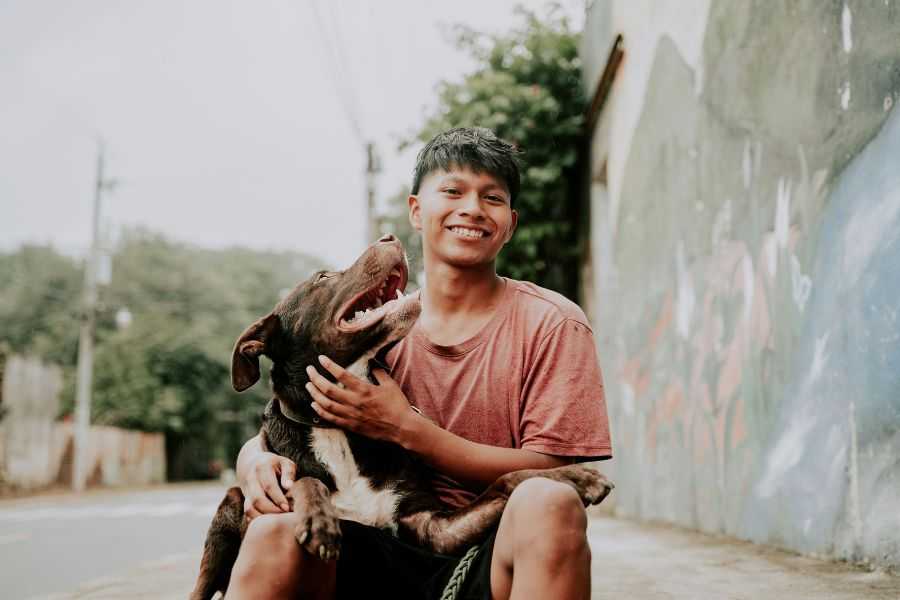
    When my sister’s dog, Junior, was on this side of the Rainbow Bridge, I was one of his favorite people. This dog would get full body wags every time I came around, and we’d spend most of the day cuddled up with each other. Now my dog, Cocolina, behaves in the same way whenever my sister comes to visit. But what goes into a dog deciding who their favorite person is? Spoiler, it’s not always the person they live with.

    Like humans, animals have their own personalities. You might rescue a dog thinking it will be the perfect companion, only to have the furry adoptee spend every waking moment following your partner around. You could spend hundreds of dollars on vet checkups, new harnesses, treats, and all the squeaky dog toys you can find, but that still won’t be enough to convince a dog to love you. Instead of showering the giver of treats with kisses, they make goo-goo eyes at the pet sitter. It turns out they have their reasons.

    dogs; dogs favorite; dog's best friend; pets; people and pets; rescue animals
    Corgi cuddles spreading joy and smiles! Photo credit: Canva

    Since our canine friends can’t talk, we have to rely on the experts to explain what the deal is with how dogs pick their favorite human. Carol Erickson, a Pennsylvania SPCA animal advocate, gave a brief interview with CBS News Philadelphia to explain her take on how dogs determine their bestest, most favorite person.

    “What it comes down to for all dogs is they decide their very favorite family member by who gives the most consistent, high-quality attention, play, and physical affection: ear rubs, scratches, that sort of thing. Dogs get positive associations from being around people who consistently provide positive experiences, including treats, meals, play that they enjoy, and remember also that early association in those first six months can influence who a dog may like better later on,” she tells the outlet.

    Rover backs up Erickson’s claim that the first six months are crucial in determining who will become the dog’s favorite person later in life. The website says, “Many dogs bond hardest to whoever cares for them during their key socialization period, which occurs between birth and six months.” However, they later note that dogs can still be socialized appropriately even as adults.

    The dog-sitting website also explains that it’s not uncommon for people who are not the dog’s primary caregiver to be their favorite person. Pointing out that physical affection is vital to dogs, if the mailman gives out head scratches daily but the owner doesn’t, the mailman may become the dog’s favorite person. While physical affection and treats go a long way for some pooches, those aren’t the only things that get puppy eyes melting with love.

    dogs; dogs favorite; dog's best friend; pets; people and pets; rescue animals
    Joyful moments with furry friends! ud83dudc36u2764ufe0f Photo credit: Canva

    “While positive experiences play a big role, a dog’s favorite person isn’t always just the one holding the treat bag. Dogs also respond to emotional connection, tone of voice, and even body language. Their preferences are shaped by a mix of familiarity, trust, and how well a person understands their needs,” explains Elle Vet Sciences. They later add, “Dogs also take emotional cues from us. If a person is stressed, loud, or inconsistent, a dog may be less likely to form a deep bond with them. On the other hand, someone who offers reassurance and stability often earns the title of ‘favorite’ without even realizing it.”

    In short, if you want to be your dog’s bestie, being consistent with affection, actions, and even training and grooming will get you there a lot faster than treats alone. Dogs aren’t trying to be persnickety; just like humans, they enjoy being around people who show them that they enjoy their company—and maybe some treats.

  • Robin Williams saw a struggling comedian bomb on stage. He knew exactly what to say to her.
    Photo credit: ha.wikipedia.orgRobin Williams performs on stage.
    , ,

    Robin Williams saw a struggling comedian bomb on stage. He knew exactly what to say to her.

    One sentence turned the worst night of her life into one of the best.

    The late, great Robin Williams once beautifully said, “I think the saddest people always try their hardest to make people happy. Because they know what it feels like to feel absolutely worthless and they don’t want anybody else to feel like that.”

    One night at a comedy club in Los Angeles, a new, nervous stand-up comic was called to the stage by the emcee. In one hand, she casually had a beer that she propped up on the piano. In the other, was her notebook full of scribbled, half-written joke premises and a few wine stains. She did her opening joke and the response was so quiet, she could hear the ice machine crackling in the kitchen. Joke two—a slight spattering of nervous laughter. Joke three got a heartier laugh, but then it went back to deafening quiet by joke four.

    She mercifully got through her final joke, and said, “That’s my time” long before the red light in the back of the club even went on. She scurried off stage with her beer not unlike that rat in New York scurrying across a sidewalk carrying a piece of pizza. Panicked, embarrassed, and, frankly, a little hungry.

    It was just one of those nights. The last time she’d done this act—with nearly the exact same jokes—she’d received an applause break. This time, she was left questioning every one of her life decisions. Why had she come to Los Angeles? How was the next month’s rent supposed to get paid? Why had she cut her hair in the “Rachel” haircut?

    As she was about to enter the hallway that led into the bar area, she could feel actual tears forming behind her eyes, like little faucets that were slowly turning on. “Don’t cry at the comedy club,” she told herself. Rather, “Don’t cry at the comedy club AGAIN.” But as the tears came anyway, she looked up and lo and behold, there was Robin Williams. She stuttered, “You. Are. One of my favorites. Ever.” He looked at her, his blue eyes warmly crinkling and said, “You were amazing.”

    Robin Williams, heart, comedian, kindness, stand up, comedy, funny, humor, celebrities
    Robin Williams was as kind as he was funny. Giphy

    It hadn’t been true. But the fact that he would go out of his way to make this total stranger’s awful night into one of her best at that time, was just the kind of person Robin was.

    I know this because that woman was me.

    I wanted to tell him about the Mork and Mindy poster on my wall as a kid, and how I had cut out Mindy’s face and put in my third-grade class photo. I wanted to tell him how much I loved his care for animals and for the unhoused and for the less fortunate. Or that because of him, I had a weird fetish for suspenders. (The last one wasn’t quite true, but I still wanted to say it.)

    But instead I merely laughed and said, “Oh, thank you. But I can do better.” He gave me a gentle look like, “We’re all in this together,” and even though I knew I’d never have a career like his, it dawned on me that it didn’t matter. That being kind to others actually DID matter and that he was a lighthouse in a really stormy, pitch-black ocean.

    I stuck it out and just a few years later, got to perform in the super cool and coveted “New Faces” show at the Just for Laughs Montreal Comedy Fest. Didn’t kill there either, but I was able to step back and look down from an aerial view. How we uplift others, whether through laughter or kindness, is really the only control we have in this world.

    Years later, after Robin passed away, I had heart surgery and was feeling down. I had read that cardiac issues could leave a person biochemically depressed and the first person I thought of was him. I messaged our mutual friend from San Francisco and asked if he remembered Robin speaking to him about heart surgery and depression. He only affirmed that yes, it was a very real side effect and that I should take it seriously.

    I have always thought of the neurotransmitter Serotonin like it was a flowery perfume. Notes of honey, lavender, rose. When someone has a good amount of it floating through their synapses, it leaves trace of itself wherever it goes, as if the tunnels it burrows under pumps it out through a steam grate. But from what I’ve heard, Robin struggled with that too. And yet he still found a way to leave a lovely and inviting scent behind him, because he wanted to make sure OTHERS were okay.

    heart, robin williams, kindness, comedians, comedy
    A heart shaped neon sign in the dark Photo byu00a0DESIGNECOLOGISTu00a0onu00a0UnsplashI guess, even in his death, I was looking to Robin for answers. But one puzzle remains solved: making others happy is the kindest thing we can do, even when our own valves — whether heart or perfume pumps — fail to work.This article originally appeared in April.

    I guess, even in his death, I was looking to Robin for answers. But one puzzle remains solved: making others happy is the kindest thing we can do, even when our own valves—whether heart or perfume pumps—fail to work.

    This article originally appeared in April. It has been updated.

Health

‘Fear-setting’: How a bestselling author conquers anxiety by writing down worst nightmares

Health

Doctor’s unique ‘4-7-8’ relaxation technique could help you fall asleep on-demand

Joy

Dogs really do have favorite people, and here’s how they decide who it will be

Music

Ethan Hawke puts the ‘Who’s your favorite Beatle?’ debate to bed forever in passionate exchange