This is an announcement with a link

Trader Joe’s incident shocks woman into rethinking grocery bag hygiene

“Am I gross?”

trader joe's, grocery bags, wine, grocery store, shopping enviornment
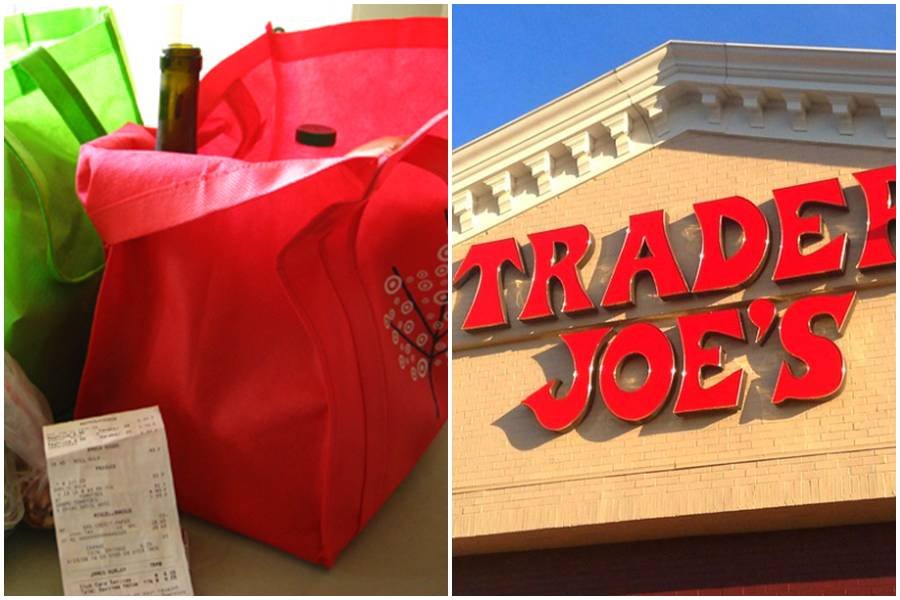
Photo credit: via Kat/Flickr and Mike Mozart/FlickrA grocery bag and a Trader Joe's.

At least 12 states in the U.S. have enacted laws encouraging the use of reusable bags for grocery shopping, resulting in a significant reduction in plastic waste entering landfills and oceans. The bans, which first started in San Francisco in 2007, have had a substantial effect on the environment; they are said to lead to up to a 47% reduction in plastic bag use.

Given the positive impact that reusable bags have on the environment, it feels wrong to shame someone for using them. However, a TikToker named Kaylen was recently shamed by a woman at the checkout stand because she had never washed her bags. Who knew that you had to wash your reusable bags, or if it was even possible?

“Okay, so I just went to Trader Joe’s and now I’m very confused because I remembered to bring my reusable bags—good for me caring about the environment and all—and the lady who was ringing up all my groceries reached for the bag and she was like, ‘Oh these are just the best bags’ and ‘I was like yeah I love them so much’ and she was like, ‘Yeah and they wash so well, too,’” Kalen recalled. “Sorry, what? They wash well? Are we washing grocery bags now?”

@kaylenhailey

This is where I draw the line. Grocery bags are not laundry #traderjoes #reusablebag #laundry #fyp #relatable ♬ original sound – kaylen

The interaction had Kalen rethinking her hygiene habits and wondering if she was in the wrong. “Am I disgusting? It’s never once crossed my mind to wash a grocery bag. Are you guys washing them?” she asked her followers. “Is everybody washing them except for me? Or is it just that lady? And if it’s just that lady, what happened in her grocery bags?”

“Yes, wash them!!!! I used to work at Trader Joe’s, and I’ve seen gross stuff in the bags. She was definitely hinting for you to wash it, but trying to be nice!” Kat wrote in the comments. “As a former cashier. Some people’s bags reeked, were sticky, and over disgusting. Wash or wipe them at least, pls,” LivelaughLuv added. “So disposable bags were meant to be disposed of, like disposable straws or spoons. But reusable bags need to be washed every once in a while… you know… like reusable straws or spoons lol,” Paige wrote.


Should I wash my reusable grocery bags?

One of the primary reasons cited by Reusethisbag to wash your bags is the prevalence of E. coli bacteria. On one trip to the store, you may have some meat that leaks into the bag. The next time, you may bring home fresh vegetables that are cross-contaminated with bacteria from the meat. This could result in you or your family members getting a nasty E. coli infection that can result in diarrhea, vomiting, and fever. Shiga-toxin-producing E. coli could result in even more severe sickness.

E-Cloth recommends washing your bags after every use if you carry meat. If you are carrying items that are less likely to have contamination, then once a week will do.

How to clean your reusable grocery bags

Cotton reusable bags can be cleaned just as easily as your clothes by putting them into the washer. Putting them in the dryer may cause them to shrink, so it is best to hang dry them after they come out of the wash. Nylon bags can be washed inside-out with soap and water or put into the wash on a delicate cycle to prevent damage.

  • Scientists tested 3 popular bottled water brands for nanoplastics. The results are alarming.
    Photo credit: Suzy Hazelwood/CanvaColumbia University researchers tested bottled water for nanoplastics and found hundreds of thousands of them.

    Evian, Fiji, Voss, SmartWater, Aquafina, Dasani—it’s impressive how many brands there are for something humans have been consuming for millennia. Despite years of studies showing that bottled water is no safer to drink than tap water, Americans are consuming more bottled water than ever, to the tune of billions of dollars in bottled water sales.

    People cite convenience and taste in addition to perceived safety for reasons they prefer bottle to tap, but the fear factor surrounding tap water is still a driving force. It doesn’t help when emergencies like floods cause tap water contamination or when investigations reveal issues with lead pipes in some communities, but municipal water supplies are tested regularly, and in the vast majority of the U.S., you can safely grab a glass of water from a tap.

    Now, a new study on nanoplastics found in three popular bottled water brands is throwing more data into the bottled vs. tap water choice.

    Researchers from Columbia University used new laser-guided technology to detect nanoplastics that had previously evaded detection due to their miniscule size.

    The new technology can detect, count and analyze and chemical structure of nanoparticles, and they found seven different major types of plastic: polyamide, polypropylene, polyethylene, polymethyl methacrylate, polyvinyl chloride, polystyrene, and polyethylene terephthalate.

    In contrast to a 2018 study that found around 300 plastic particles in an average liter of bottled water, the study published in the journal Proceedings of the National Academy of Sciences in January of 2024 found 240,000 nanoplastic particles per liter bottle on average between the three brands studied (the name of the brands were not indicated in the study).

    As opposed to microplastics, nanoplastics are too small to be seen by microscope. Their size is exactly why experts are concerned about them, as they are small enough to invade human cells and potentially disrupt cellular processes.

    “Micro and nanoplastics have been found in the human placenta at this point. They’ve been found in human lung tissues. They’ve been found in human feces; they’ve been found in human blood,” study co-author Phoebe Stapleton, associate professor of pharmacology and toxicology at Rutgers University’s Ernest Mario School of Pharmacy, told CNN Health.

    We know that nanoplastics are making their way into our bodies. According to UCLA Health, there is some evidence that they may be negatively affecting our health.

    Studies conducted on animals and on cells in a lab suggest nanoplastics can impact a variety of organs and systems throughout the body,” a report by UCLA Health states. “Exposure to high quantities of nanoplastics may affect cell’s immune function and cause inflammation…There is even some evidence that by altering cell function, nanoplastics may increase the risk of some types of cancer.”

    The UCLA Health report notes, however, that “very little research to date has looked specifically at humans.”

    According to Dr. Sara Benedé of the Spanish National Research Council’s Institute of Food Science Research, it’s not just the plastics themselves that might cause damage, but what they may bring along with them.

    “[Microparticles and nanoparticles] have the ability to bind all kinds of compounds when they come into contact with fluids, thus acting as carriers of all kinds of substances including environmental pollutants, toxins, antibiotics, or microorganisms,” Benedé told Medical News Today.

    Where is this plastic in water coming from?

    This study focused on bottled water, which is almost always packaged in plastic. The filters used to filter the water before bottling are also frequently made from plastic.

    water, bottle, nanoplastics, health, microplastics
    A plastic bottle on the seashore. Photo by Brian Yurasits on Unsplash

    Is it possible that some of these nanoplastics were already present in the water from their original sources? Again, research is always evolving on this front, but microplastics have been detected in lakes, streams and other freshwater sources, so it’s not a big stretch to imagine that nanoplastics may be making their way into freshwater ecosystems as well.

    However, microplastics are found at much higher levels in bottled water than tap water, so it’s also not a stretch to assume that most of the nanoplastics are likely coming from the bottling process and packaging rather than from freshwater sources.

    The reality is, though, we simply don’t know yet.

    “Based on other studies we expected most of the microplastics in bottled water would come from leakage of the plastic bottle itself, which is typically made of PET (polyethylene terephthalate) plastic,” lead author Naixin Qian, a doctoral student in chemistry at Columbia University, told CNN Health. “However, we found there’s actually many diverse types of plastics in a bottle of water, and that different plastic types have different size distributions. The PET particles were larger, while others were down to 200 nanometers, which is much, much smaller.”

    At this point, we have plenty of environmental reasons for avoiding bottled water unless absolutely necessary and opting for tap water instead. Even if there’s still more research to be done, the presence of hundreds of thousands of nanoplastics in bottled water might just be another reason to make the switch.

    This article originally appeared on 2.2.24. It has been updated.

  • California brought back beavers for the first time in 70 years, and the results are already amazing
    Photo credit: Canva and CDFW.Checking in on California's beaver project.

    Deep in the Sierra Nevada foothills on the Tule River Indian Reservation, tribal member Kenneth McDarment had passed by an ochre-red pictograph countless times throughout his life—a simple yet unmistakable image of a beaver with four paws and a distinctive paddle tail. Estimated to be between 500 and 1,000 years old, this ancient artwork adorned the walls of a rock shelter alongside other paintings of wildlife, humans, and geometric designs created by the Yokuts people.

    To McDarment, this beaver image seemed like just another beautiful piece of Native art. That is until he looked at it again—this time seeing it clearly with fresh eyes.

    beaver, project, california, environment, sustainability
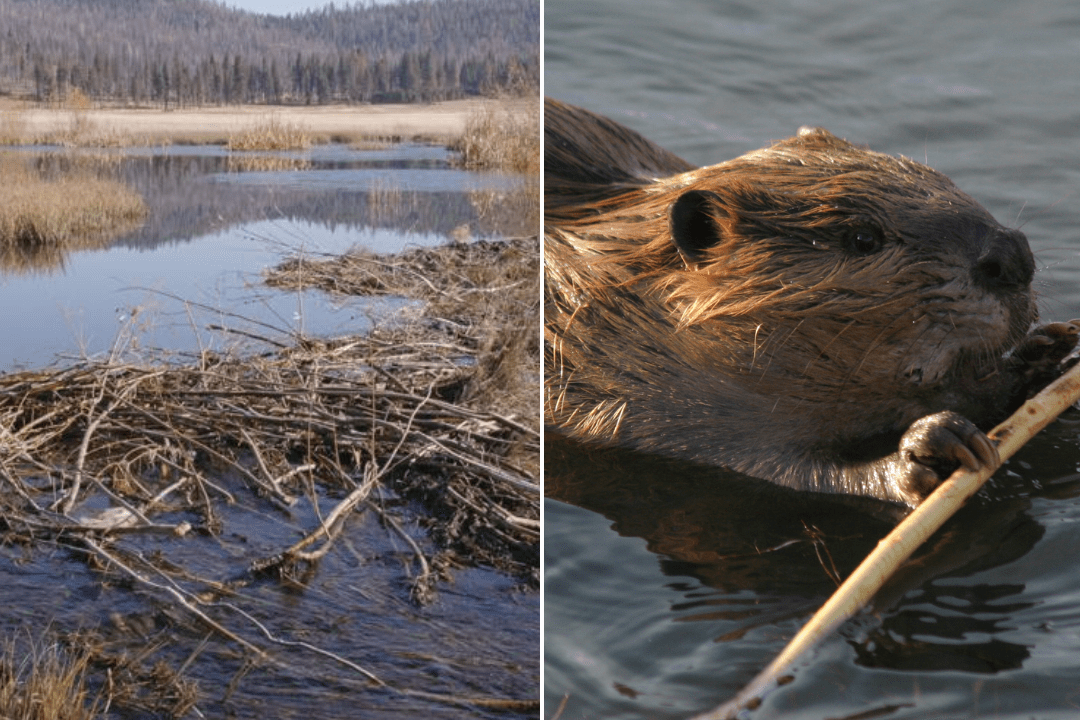
    Newly introduced beaver swimming through the water. Credit: CDFW

    When severe drought struck the reservation about a decade ago, McDarment and other tribal leaders began searching for innovative ways to conserve water. The answer, it turned out, had been staring at them from the cave walls all along.

    “Sometimes you need to just look at things more often,” McDarment told researchers.

    Glancing back up at the beaver, the pictograph suddenly took on new meaning as McDarment and the other tribal leaders began to recognize the ancient wisdom embedded in their ancestors’ art. If beavers had once thrived on these lands and helped manage water resources, perhaps bringing them back could address their contemporary drought challenges. This revelation prompted the tribe to pursue what would become California’s first beaver restoration program in over seven decades.

    From ancient wisdom to modern partnership

    The revelation sparked an unprecedented collaboration between California’s Department of Fish and Wildlife (CDFW) and Native tribes. In the past, the Tule River Tribe and the Maidu Summit Consortium were dismissed, and told there was “no way to move beavers in California legally.”

    But after years of advocacy and preparation, in 2021, California finally launched its first beaver restoration program since the 1950s in partnership with both tribes.

    On October 18, 2023, seven beavers were released into their new home in Tásmam Koyóm, a 2,325-acre valley in Plumas County.

    “You just saw this tiny brown furball, this little nugget, catch a ride on the back of his sibling’s tail, and it looked like he was surfing. I don’t think it set in for days afterward, but that moment will go down as one of the highlights of my entire career. I think we were very proud of what we had done, and really optimistic about the potential that this represents for us and the good we think we can do moving forward.” – Valerie Cook, the beaver restoration program manager for the CDFW.


    beaver, project, california, environment, sustainability
    Beavers being released to explore their new territory. Credit: CDFW

    Where did they find the beavers? Set a few traps and catch as many as they could? No. The efforts presented in this project represented a fundamental shift in how California approaches wildlife management and water conservation. The beaver relocation process involved identifying “problem” beavers in areas where they caused flooding, and then safely transporting them to new locations where their engineering skills could work environmental magic. For the first time in nearly 75 years, the state began relocating beavers.

    “We can make our future different from our past,” declared CDFW Director Charlton H. Bonham during the historic first release. “Our past is one where we treated these animals and others as varmints, as nuisances, and our culture over time ran them off the landscape. That can’t be our future”.

    Nature’s ultimate engineers get to work

    The results have been nothing short of spectacular. At the Maidu Summit Consortium’s Tásmam Koyóm meadow—which means “tall grass” in the Mountain Maidu language—relocated beavers have constructed an impressive 328-foot dam, effectively creating a massive wetland complex that has increased water coverage by more than 22% according to CDFW’s April 2025 report.

    beaver, project, california, environment, sustainability
    Dams like these offer shelter, a safe home for beavers, and food storage. Image by John Cannon/Mongabay.

    “They are really powerful ecosystem engineers,” Emily Fairfax, an assistant professor of geography at the University of Minnesota, told Mongabay. “The number of services they provide to us and ways that they build resilient landscapes is honestly too much to just rattle off all at once.”

    The benefits extend far beyond water storage, with those furry “ecosystem engineers” essentially transforming the landscape into a climate-resilient powerhouse:

    Cultural reconnection and sovereignty

    For the Mountain Maidu and Tule River tribes, the beaver restoration represents much more than environmental conservation—it’s a symbol of just how far they’ve come in reclaiming their relationship to the land. Nearly two centuries ago, Tásmam Koyóm Meadow was forcibly taken from the Mountain Maidu tribe and was not rightfully returned until 2019. Four years later, the beaver—which the Mountain Maidu call hi-chi-hi-nem and consider as family—finally returned to their land, marking a moment of healing and deeply profound spiritual significance.

    Shannon Salem Williams, a Mountain Maidu program manager, said seeing the beavers slip into the water was a “full circle moment.” Then added, “It was like a big welcoming home.”

    A blueprint for climate resilience

    The success story of California’s beaver restoration program proves that sometimes, the most efficient solution to modern issues is simply to return to ancient wisdom.

    With climate change intensifying droughts, floods, and wildfires across the American West, beaver-based restoration is gaining recognition as a cost-effective, nature-based solution. The California program has become so successful that Governor Gavin Newsom signed legislation in 2024 to make the beaver restoration program permanent.

    Scientists and activists remain hopeful that this trend will continue. “I think we’re in kind of an idyllic [stage of] beaver literacy,” advocate Heidi Perryman said. “People have begun to hear a lot of good things about beavers, and they’re very hopeful that beavers can fix everything that we’ve messed up.”

  • Scientists test 3 popular bottled waters for nanoplastics using new tech, and yikes
    Photo credit: CanvaRows of bottled water
    , ,

    Scientists test 3 popular bottled waters for nanoplastics using new tech, and yikes

    The results showed an alarming average of 240,000 nanoplastics per 1 liter bottle—but what does it mean for our health?

    Evian, Fiji, Voss, SmartWater, Aquafina, Dasani—it’s impressive how many brands we have for something humans have been consuming for millennia. Despite years of studies showing that bottled water is no safer to drink than tap water, Americans are more consuming more bottled water than ever, to the tune of billions of dollars in bottled water sales.

    People cite convenience and taste in addition to perceived safety for reasons they prefer bottle to tap, but the fear factor surrounding tap water is still a driving force. It doesn’t help when emergencies like floods cause tap water contamination or when investigations reveal issues with lead pipes in some communities, but municipal water supplies are tested regularly, and in the vast majority of the U.S., you can safely grab a glass of water from a tap.

    And now, a new study on nanoplastics found in three popular bottled water brands is throwing more data into the bottled vs. tap water choice

    nanoplastics, bottled water, microplastics, water safety, public health, Columbia University, environmental health, tap water, plastic pollution, scientific study
    Water being poured into a glass Canva

    Researchers from Columbia University used a new laser-guided technology to detect nanoplastics that had previously evaded detection due to their miniscule size.

    The new technology can detect, count and analyze and chemical structure of nanoparticles, and they found seven different major types of plastic: polyamide, polypropylene, polyethylene, polymethyl methacrylate, polyvinyl chloride, polystyrene, and polyethylene terephthalate.

    In contrast to a 2018 study that found around 300 plastic particles in an average liter of bottled water, the study published in the journal Proceedings of the National Academy of Sciences in January of 2024 found 240,000 nanoplastic particles per liter bottle on average between the three brands studied. (The name of the brands were not indicated in the study.)

    As opposed to microplastics, nanoplastics are too small to be seen by microscope. Their size is exactly why experts are concerned about them, as they are small enough to invade human cells and potentially disrupt cellular processes.

    “Micro and nanoplastics have been found in the human placenta at this point. They’ve been found in human lung tissues. They’ve been found in human feces; they’ve been found in human blood,” study coauthor Phoebe Stapleton, associate professor of pharmacology and toxicology at Rutgers University’s Ernest Mario School of Pharmacy told CNN Health,

    We know that nanoplastics are making their way into our bodies. We just don’t have enough research yet on what that means for our health, and we still have more questions than answers. How many nanoplastics does it take to do damage and/or cause disease? What kinds of damage or disease might they cause? Is whatever effect they might have cumulative? We simply don’t have answers to these questions yet.

    nanoplastics, bottled water, microplastics, water safety, public health, Columbia University, environmental health, tap water, plastic pollution, scientific study
    A young boy drinks from a bottle of water Canva

    That’s not to say there’s no cause for concern.

    We do know that certain levels of microplastic exposure have been shown to adversely affect the viability of cells. Nanoplastics are even smaller—does that mean they are more likely to cause cellular damage? Science is still working that out.

    According to Dr. Sara Benedé of the Spanish National Research Council’s Institute of Food Science Research, it’s not just the plastics themselves that might cause damage, but what they may bring along with them. “[Microparticles and nanoparticles] have the ability to bind all kinds of compounds when they come into contact with fluids, thus acting as carriers of all kinds of substances including environmental pollutants, toxins, antibiotics, or microorganisms,” Dr. Benedé told Medical News Today.

    Where is this plastic in water coming from?

    This study focused on bottled water, which is almost always packaged in plastic. The filters used to filter the water before bottling are also frequently made from plastic.

    nanoplastics, bottled water, microplastics, water safety, public health, Columbia University, environmental health, tap water, plastic pollution, scientific study
    A reusable water bottle Canva

    Is it possible that some of these nanoplastics were already present in the water from their original sources? Again, research is always evolving on this front, but microplastics have been detected in lakes, streams and other freshwater sources, so it’s not a big stretch to imagine that nanoplastics may be making their way into freshwater ecosystems as well. However, microplastics are found at much higher levels in bottled water than tap water, so it’s also not a stretch to assume that most of the nanoplastics are likely coming from the bottling process and packaging rather than from freshwater sources.

    The reality is, though, we simply don’t know yet.

    “Based on other studies we expected most of the microplastics in bottled water would come from leakage of the plastic bottle itself, which is typically made of PET (polyethylene terephthalate) plastic,” lead author Naixin Qian, a doctoral student in chemistry at Columbia University, told CNN Health. “However, we found there’s actually many diverse types of plastics in a bottle of water, and that different plastic types have different size distributions. The PET particles were larger, while others were down to 200 nanometers, which is much, much smaller.”


    nanoplastics, bottled water, microplastics, water safety, public health, Columbia University, environmental health, tap water, plastic pollution, scientific study
    A woman drinks from a bottle of water on the beach Canva

    We need to drink water, and we need to drink safe water. At this point, we have plenty of environmental reasons for avoiding bottled water unless absolutely necessary and opting for tap water instead. Even if there’s still more research to be done, the presence of hundreds of thousands of nanoplastics in bottled water might just be another reason to make the switch.

    This article originally appeared last year.

Health

‘Fear-setting’: How a bestselling author conquers anxiety by writing down worst nightmares

Health

Doctor’s unique ‘4-7-8’ relaxation technique could help you fall asleep on-demand

Joy

Dogs really do have favorite people, and here’s how they decide who it will be

Music

Ethan Hawke puts the ‘Who’s your favorite Beatle?’ debate to bed forever in passionate exchange