This is an announcement with a link

15 alternatives to asking ‘How was school?’ that will get kids talking about their day

Avoid the dreaded monosyllabic response with these engaging alternatives.

parenting, motherhood, fatherhood, kids, after school, communication
Photo credit: media crediTeensu00a0not wanting to open up to their parents is a normal phase.

Effective parenting is largely about communication, but sometimes communicating with kids is easier said than done. If you’re a parent of a school-aged child, especially a tween or teen, you’ve likely had some version of this conversation more times than you can count:

“Hey, how was school today?”

“Fine.”

“Just fine? Anything interesting happen?”

“Not really.”

“Well, did you have a good day at least?”

“Yep.”

The “How was school?” question inevitably leads to monosyllabic answers that feel more like an obligatory response rather than an actual, thoughtful answer. And yet we keep asking it because it’s a reasonable question and we really want to know. We’re not asking for a dissertation, so why don’t kids open up when we ask them how school was? And how do we get them to do so?

According to child behavioral experts, the problem lies partially in the question itself.

“Often, we choose questions like ‘How was school?’ or ‘How was your day?’ Questions like that don’t give a child a place to start,” says Kristi Budd, a school counselor at The Gordon School in Rhode Island. “They also don’t show a lot of thought or understanding on the part of the adult. Think about the different facets of your day, and how broad that question might seem.”

Children’s days are busy, just like ours. “A good rule of thumb is: could you answer the same question?” Budd says. “Or would it leave you wondering where to start?”

parenting, motherhood, fatherhood, kids, after school, communication
Broad, vague questions can be overwhelming for any of us. Photo credit: Canva

Thoughtful questions come from thinking through a child’s day, putting yourself in their shoes, and recognizing where there might be triumphs or trials they might like to share. What might your kid have been thinking about during recess? What might they have been feeling in class?

“Try asking questions that help your child reflect and express their feelings,” suggests Irin Rubin, author of The MamaZen Parenting Method. “This not only gets them talking, it shows them that you truly value their inner world.”

Another reason kids might be reticent to open up? The timing of the question, Dr. Shereen Mohsen, a clinical psychologist, tells Upworthy. If you try to ask them about their day right as you’re picking them up from school, you’ll probably get shut down, as kids need time to shift gears.

“A lot of times, kids just need to decompress,” Mohsen says. “School takes up a lot of their energy—academics, friends, rules, social stuff—that by the time they’re home, they don’t want to rehash it all.”

parenting, motherhood, fatherhood, kids, after school, communication
Sometimes kids need a little time to decompress before they're ready to talk. Photo credit: Canva

Assuming they’ve had a little decompression time first, here are 15 alternative questions suggested by experts that might help kids open up about their day:

What was something that made you smile today?

Was there a moment you felt really proud of yourself?

What was tricky for you today, and how did you handle it?

Who did you feel most connected to at school?

Who do you want to get to know better?

What’s one thing you wish I could have seen you do today?

What is one thing that you enjoyed?

What was one thing that challenged you?

parenting, motherhood, fatherhood, kids, after school, communication
Walking and talking can help. Photo credit: Canva

What was something that annoyed you today?

What surprised you?

What was the funniest thing that happened today?

Who did you sit with at lunch?

Was there a part of your day that felt really long or boring?

If you could do over one thing from today, which one would you pick?

Did anyone say something that made you laugh?

If your kids are older, don’t expect as much sharing about the details of their day, and don’t take it personally.

“For tweens and teens, keeping things to themselves is often more about independence than rejection,” Mohsen says. “Staying curious without pushing too hard shows them you are there for them whenever they’re ready.”

parenting, motherhood, fatherhood, kids, after school, communication
Teensu00a0not wanting to open up to their parents is a normal phase. Photo credit: Canva

Budd suggests making sure teens have other trusted adults in their lives to open up to besides you.

“As your children approach high school, it is time to get your mind around the idea that they aren’t going to tell you everything,” she says. “As a caregiver, it becomes more important that they have an adult—anyone—that they trust. It could be Aunt Cindy, it could be the librarian, it could be the school nurse. When your child is talking, listen to learn who the adults are in their life, and do what you can to encourage those relationships. It may break your heart to not be the only trusted adult in your child’s life, but you’re doing them a great service by making sure they have a team of grownups and not just one parent.”

Getting kids to talk may seem harder than it should be, but with the right timing, questions, and expectations, the lines of communication can remain open and kids will know they can always come to you if and when they have things to share.

  • Trendy ‘grandma showers’ get a lot of flack online, but when can they be a good thing?
    Photo credit: @morethangrand/TikTokPerhaps there is a right and wrong way to throw a grandma shower.

    Grandparentsgrandmothers, in particular—often earn a bad reputation for using the arrival of a baby to shift the spotlight towards themselves, rather than becoming a support system for the new parents. Insisting on cutesy nicknames like “glamma” comes to mind as an example (that’s not to say that grandmas can’t elect to have alternative nicknames; it’s more so the lack of collaboration that’s sometimes involved).

    And growing more popular over the past few years is the “grandma shower” trend, which is essentially a baby shower, complete with all the usual fanfare, such as games, gifts, registries, and the like. However, this time, the celebrations are geared towards welcoming a first-time grandma into her new role.

    With the aforementioned factors in mind, it’s probably no wonder that critics have called grandma showers “tacky” and attention-seeking. One person even took to X to call it “peak boomer entitlement.” As far back as 2010, etiquette expert Judith Martin referred to it as a shallow gift grab.

    Perhaps, if we allow for nuance, we can see that there may be some circumstances where grandma showers are appropriate.

    As popular grandparent advice site More Than Grand explains, having a group of coworkers celebrate a grandma shower during their lunch break, for instance, is virtually harmless, as are any other kind of low-key shindigs, since they don’t actually take anything away from the parents.

    @morethangrand Are granny showers a nice new tradition or a tacky gift grab? Welcoming new grandparents with New Grandparent Essentials is always appropriate! Get New Grandparent Essentials at morethangrand.com/nge #grandparents #grandparent #CommunicationTips #GrandparentsLove #AdultChildren #NewGrandparent #newgrandma#newgrandparents #newgrandma #Grandparenting #HealthyBoundaries #Boomer #EffectiveCommunication #GentleGrandparenting ♬ original sound – MoreThanGrand

    Additionally, gifts could be a viable option if grandma is doing most of the caretaking and can’t afford to get these things herself. At least then, it’s the village’s needs that are being supported. Shared grandparent wisdom or grandparenting books could even be a good grandparent-specific gift that doesn’t necessarily cross a line.

    HappiestBaby.com also had a few other helpful guidelines:

    -Not having the grandparent/parent host the party

    -Wait to schedule the grandma shower for AFTER the actual baby shower, and obviously don’t schedule it for a competing time

    -Don’t double-dip on the invite list

    -If creating a registry, simply share the parent’s. Don’t create a separate one.

    It should go without saying, but a lot of these common icks that come as a result of grandma showers could be avoided by simply consulting the mom-to-be on what she’s comfortable with, More Than Grand argues. Much of the conflict in this area stems from not giving parents the respect they deserve as the ultimate authority on what’s best for their child.

    Of course, becoming a grandparent is a wonderful moment that is genuinely worthy of celebration. However, as is evident by the overwhelming number of absentee grandparents out there, it is not nearly as involuntarily life-changing as becoming a parent. And that seems to be the major thing that ruffles feathers. Keep this in mind, and having a slice of cake that says “congrats GMA!” shouldn’t be an issue.

  • More parents are installing landlines for their kids and the benefits are undeniable
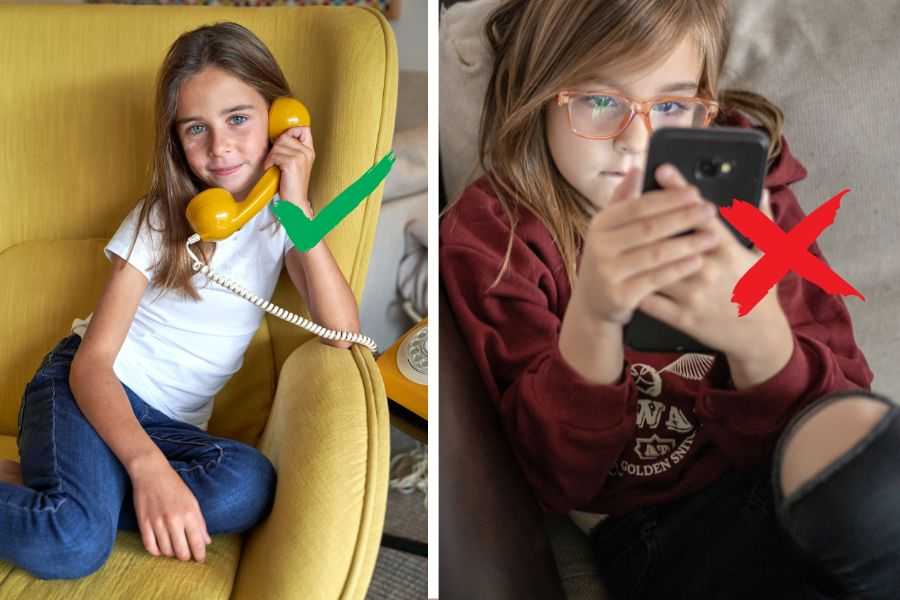
    Photo credit: CanvaMore parents are installing landlines for their kids; the benefits are undeniable.

    Do you remember chatting with your friends on a three-way call, wrapping the phone cord around your finger while you got the scoop on what happened during 4th-period lunch? If not, then you were probably born after cellphones became the norm. But for older people, a time was had back then—and now, today’s kids might get to experience that nostalgic telephone experience, too.

    More parents are starting to install landline phones for their kids instead of getting them cellphones. Older generations often complain that Gen Z seems to lack social skills, but they’re the first generation to grow up without house phones. It turns out that all those hours spent chatting on the landline may have been a key factor in developing effective communication skills.

    kids cell phone; kids landline; landlines; communication; low tech life; old school parenting; social skills
    Relaxing chat with a vintage vibe. Photo credit: Canva

    However, for parents now, the development of communication skills is a welcome, unexpected side effect of trying to keep their kids off smartphones for a little longer. In 2025, it may seem imperative that a child have a cellphone so they can stay in touch with their family members. Latchkey kids may be seen as a thing of the past, but they still exist when kids age out of after-school care. That means parents who are concerned about safety may turn to cellphones a little earlier than they’d like to make sure their kids make it into the house after getting off the bus.

    A cellphone may help a child communicate that they’ve made it home, but it doesn’t protect them from the dangers of having unfettered access to the Internet and social media. This is why some parents are turning to landlines again, and they’re pleasantly surprised by the results.

    kids cell phone; kids landline; landlines; communication; low tech life; old school parenting; social skills
    Children immersed in their smartphones outdoors. Photo credit: Canva

    “My husband and I decided to kind of pause the screen path that so many people were on, but we pivoted and surprised her with a landline,” Caron Morse tells The Today Show.

    The mom was able to convince a few other parents to join in, watching the circle of landlines grow for her daughter. However, having a constantly busy phone wasn’t the sweet side effect—it was the increased communication skills. “It sounds so weird to say that bringing a landline into the house was my smartest parenting choice, but in my heart I really feel like this was an important pivot,” the mom says.

    Paul Zalewski, co-founder of Fathercraft, shares with Parents Magazine that he installed a cordless landline complete with an answering machine for his kids. He tells the magazine that the shift was deliberate so his kids can practice real conversations, adding, “Their overall communication has become more intentional. Since the landline is voice only, they think before they speak. [The phone] has played a crucial role in building confidence and competence. The older one, in particular, has taken on small adult-like tasks, such as calling to confirm logistics or leaving an important message. We see that responsibility translates into other areas of independence.”

    kids cell phone; kids landline; landlines; communication; low tech life; old school parenting; social skills
    Boy absorbed in his phone, lying on a cozy bed. Photo credit: Canva

    It was even great for their listening skills. The same thing goes for parents who have ditched full-time cell phone use to have a landline in the house. Patty Schepel writes for The Every Mom about her unexpected positive outcome when she switched to using a landline for a week after realizing her child was competing with her phone for attention.

    She explains, “My goal was to get rid of my phone-separation anxiety, and I wanted to be more present with my kids. However, I was floored by all the additional benefits that came out of this experience.” She lists, “I sat with my thoughts. I was in a better mood. I felt more present with my kids. I noticed fewer behavioral issues with my son. I was more productive. I called my friends and had more meaningful conversations.” Schepel says the experiment made her realize that she didn’t actually need to be connected all the time or jump onto the emotional rollercoaster that is social media.

    kids cell phone; kids landline; landlines; communication; low tech life; old school parenting; social skills
    Kids enjoying screen time together outside. Photo credit: Canva

    Giving a child a smartphone is a huge decision, especially if it’s not a restricted phone like the Bark or Gabb phones that allow complete parental control. However, even with phones like that, introducing the phone can create a habit that some parents may not be ready to contend with. Childhood digital safety expert for Bark Technologies, Titania Jordan, tells Parents Magazine, “Slow, intentional access protects kids from the dangers and stress of life online. I’ve never met a parent who wished they’d handed over tech earlier—only ones who wish they’d waited longer. This landline trend is just one sign of a larger move toward slower, lower-tech childhoods.”

  • Abby Wambach passionately explains why parents shouldn’t go to their kids’ sports practices
    Photo credit: via Canva/PhotosA girl practicing soccer and Abby Wambach.

    Taking a kid to soccer practice is a good time for many of us to catch up on our Instagram feeds, read a good book, or sit in the car, where it’s warm, and watch from the parking lot. Sure, it’s great to see your kid run around and be active, but it’s a lot more fun to see them play in a game where something is at stake instead of running drills or playing Sharks and Minnows.

    For those who get a little bored at their kid’s practices, you will want to listen to the words of the great Abby Wambach: Don’t go.

    Wambach is a retired soccer player, coach, and member of the National Soccer Hall of Fame, who was a regular in the U.S. women’s national soccer team from 2003 to 2015. In 2012, she was named the FIFA World Player of the Year. She shared her thoughts on a recent episode of her Welcome to the Party podcast with co-host Rebecca Lowe from NBC’s Premier League coverage.

    The conversation began when Lowe admitted that she doesn’t get to attend all of her child’s games due to her job. “I go to the practices because I don’t get to go to as many games as I would like. I probably go to one every four because I’m at work on the weekends,” Lowe said.

    Should parents attend their child’s sports practice?

    “Just think about this. What is the purpose of practice? It’s not for the kid to look over their shoulder and make sure that their mom, dad, or parent is sitting on the sideline watching them. Practice is for free play for them,” Wambach responded. “That there is nothing that’s going to encumber them from trying something new…taking a risk, making a mistake, trying something, being successful. Because what we’re then doing is, we’re externalizing all of our motivation.”

    soccer, girl soccer, soccer game, soccer ball, soccer field
    Some young children playing soccer. via Canva/Photos

    Wambach goes on to say that if a child is giving their all on the practice field to make their parents happy, it makes it more difficult for them to develop a more critical skill, having the self-determination and motivation to play for themselves. “‘Cause we want our kids to be self-starters and internally motivated. So if you’re at practice, it outsources that motivation,” Wambach said.

    Give kids space and they’ll grow

    Let Grow, a movement dedicated to giving children greater independence, agrees with Wambach’s take on practice, suggesting that when children are allowed to practice without parents looking over their shoulders, they are more likely to develop a better relationship with their teammates and coaches. “Yet, by being there all the time, you’re not giving your child a chance to really grow and develop that relationship with their coach and teammates. They’re always watching you as you watch them,” the organization says. “It might seem innocent enough to watch every practice, but it can also give coaches a nice break to not have to deal with the hovering.”

    So, next time your kid has to go to practice, consider giving them some space. By giving them room to take risks, make mistakes, and build stronger connections with their teammates and coach, you’re helping them grow both on and off the field. Sometimes, the best support parents can give their child is knowing when to leave them alone.

Health

‘Fear-setting’: How a bestselling author conquers anxiety by writing down worst nightmares

Health

Doctor’s unique ‘4-7-8’ relaxation technique could help you fall asleep on-demand

Joy

Dogs really do have favorite people, and here’s how they decide who it will be

Music

Ethan Hawke puts the ‘Who’s your favorite Beatle?’ debate to bed forever in passionate exchange