This is an announcement with a link

How do you know someone is very smart? Here are 15 ‘subtle signs’ others notice.

“You can understand both sides of an issue and still think one is wrong.”

intelligent people, signs of intelligence, reddit
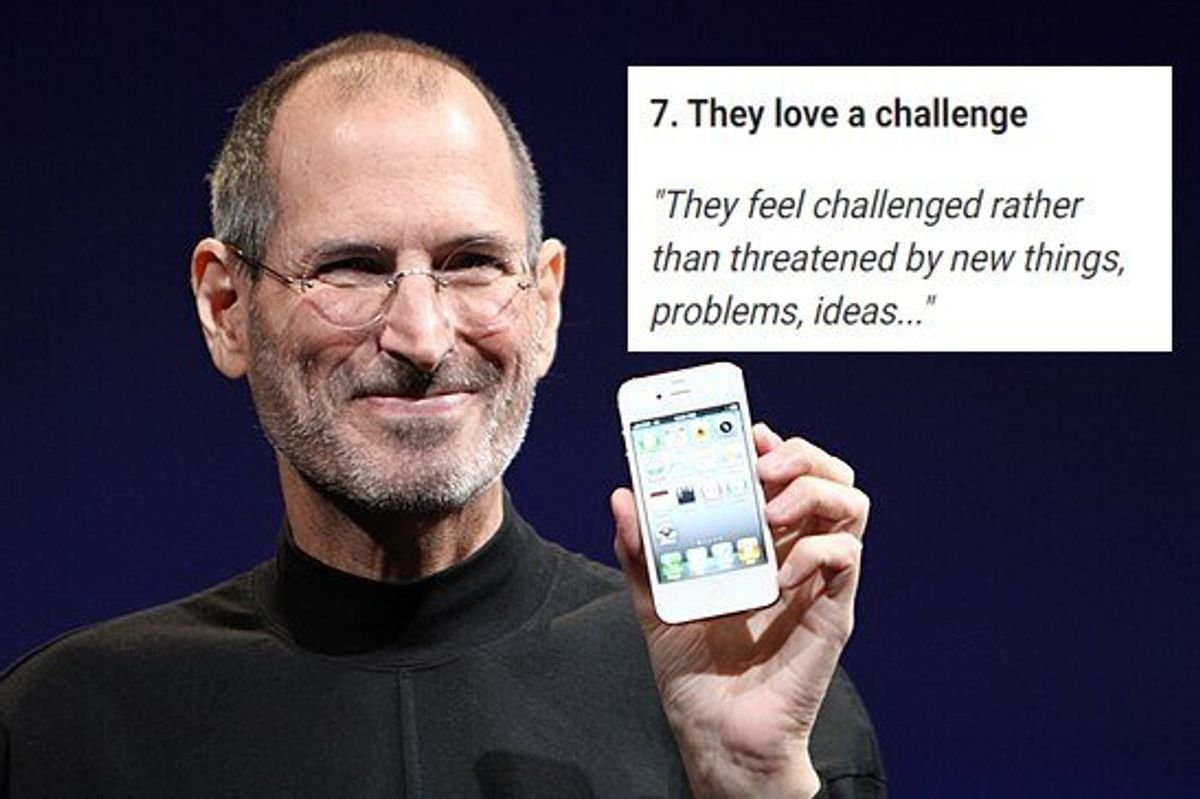
Photo credit: via Matthew Yohe/Wikimedia CommonsSteve Jobs shows off iPhone 4 at the 2010 Worldwide Developers Conference.

There is a big difference in how highly intelligent people communicate versus those with smaller IQs. A Redditor named Occyz wanted to know how people tell the difference by asking them to share the “subtle” signs that someone is very intelligent.

The question was a big hit on the forum, receiving over 4,000 responses.

A big takeaway is people think highly intelligent people are mentally flexible. They are always interested in learning more about a topic, open to changing their minds when they learn new information, and they’re acutely aware of what they don’t know.

In fact, according to the psychological principle known as the Dunning-Krueger effect, there is a big confidence chasm between highly intelligent people and those who are not. Low-IQ people often overestimate what they know about topics they need to familiarize themselves with. Conversely, people with high IQs underestimate their knowledge of subjects in which they are well-versed.

Here are 15 “subtle” signs that someone is highly intelligent.

1. They admit their mistakes

“When someone can admit a mistake and they know they don’t know everything.”

2. Great problem-solvers

“They’re very good at problem-solving. Even if it’s something they have no experience with they always approach the problem from the right angle.”

3. They appreciate nuance

“‘I can hold two opposing ideas in my head at the same time.’ Anyone who is willing to do that is intriguing to me. Especially with polarizing issues. They might actually be interesting to talk to.”


woman, thoughtful, problem solver, intelligence, learning, study
Intelligent people tend to be thoughtful. Image via Canva.

4. They say ‘I don’t know’

“I like to call it being smart enough to know how stupid you are.”

“100% this. I have a good friend who is a teaching professor at Cambridge. He is acutely aware of how ‘little’ he knows about areas outside his specialization.”

5. They have self-doubt

“They struggle with imposter syndrome. Dumb people always think they’re [great].”

“It can happen but I’ve met plenty who don’t really doubt themselves. Instead, they take not knowing or not having any experience as an opportunity, just like people go down interesting internet rabbit holes. Really smart people can view mistakes as opportunities for growth and inexperience as an opportunity to gather new experiences.”

The great American poet and novelist Charles Bukowski once wrote, “The problem with the world is that the intelligent people are full of doubts and the stupid ones are full of confidence,” and according to science, he’s correct.

“Ignorance is associated with exaggerated confidence in one’s abilities, whereas experts are unduly tentative about their performance,” Stephan Lewandowsky, Chair of Cognitive Psychology at the University of Bristol, writes for the World Economic Forum. “This basic finding has been replicated numerous times in many different circumstances. There is very little doubt about its status as a fundamental aspect of human behavior.”

6. They ask questions

“They are ok with being perceived as ‘stupid’ by asking questions — if we hold back in fear, we’ll never truly learn. Plus, it’s a good way to show others it’s ok to question things if you don’t understand — better off if we’re on the same page instead of hoping things work out without being informed.”


curiosity, asking questions, intelligent people, thoughtful
It's okay to ask questions becauseu00a0that's how we learn! Image via Canva.

7. They love a challenge

“They feel challenged rather than threatened by new things, problems, ideas…”

“‘I don’t know’ is the beginning of a puzzle, not the conclusion.”

8. They know their audience

“They can adapt their communication style — vocabulary, tone, content, etc — to fit the situation and people they’re talking to, and it seems completely natural.”

“It’s a bit past code-switching, though code-switching is a part of it. Being able to explain complex thoughts in simpler terms based on audience demonstrates your understanding. If the only people who can understand you are fellow people with the same educational exposure as you, you just have knowledge, not intelligence.”

9. They can simplify big ideas

“I consider someone intelligent if they’re able to explain something incredibly complicated in simpler and more readily understood terms.”

“Fantastic teachers can make learning nearly effortless.”

10. They listen to people they disagree with

“Someone who can understand someone’s opposing view without having to agree with it or get angry over it.”

11. They’re humble

“They don’t continually need to tell people how intelligent they are.”

“At a certain point, they realize they are smarter at certain things than other people, but they understand the importance of being humble.”

12. They take a moment

They pause to think about a novel question instead of instantly blurting out an answer. Sometimes people think it means they’ve been ‘stumped’ and claim victory. No, they’re thinking, analyzing, and formulating a reply.”

This idea is backed up by science. A study published by IFL Science found that people who score high on intelligence tests answer easy questions quickly. However, they spend more time on complex questions than their less intelligent peers. They have the intelligence to wait until their entire brain has grappled with a problem before answering.

“In more challenging tasks, you have to store previous progress in working memory while you explore other solution paths and then integrate these into each other,” said lead author Professor Michael Schirner. “This gathering of evidence for a particular solution may sometimes take longer, but it also leads to better results.”

thoughtful, thinking, moment, consideration, solution
Veggie Tales Thinking GIF Giphy

13. They’re well-spoken

“I usually find that creativity, humor, and verbal acuity are good signs of intelligence. I generally see lack of empathy, low openness, and seeing the world in absolutes as signs of low intelligence.”

14. Dry sense of humor

“Pulling it off requires an observant, quick wit with a nonchalant delivery that almost downplays its own cleverness. Like it means their immediate passing thoughts are often profound enough to be very funny without any real effort.”

15. They are great storytellers

“They craft narratives for themselves and for others that are compelling, that make the world make sense, that invigorate and install a goal, a mission.”


This article originally appeared last year.

  • Ex-teacher shares the 4 things she couldn’t tell parents until after she quit
    Photo credit: via Canva/PhotosA woman looks very embarrassed.
    ,

    Ex-teacher shares the 4 things she couldn’t tell parents until after she quit

    “Please start putting deodorant on your kids before you notice that they need it.”

    Though many teachers are leaving the profession, not all of them are making national news. Maggie Perkins, 32, made headlines in 2022 when she quit the teaching profession to work at Costco, and showed no interest in looking back.

    “The conditions were worsening rapidly, and I realized they weren’t getting better, and nobody seemed alarmed enough to do anything. I was 29 when I decided to leave,” she told People, noting she was making $47,000 at the time.

    “The more I learned about Costco and the different roles at the company, the happier I was at the idea of working there, whether at the warehouse or corporate, for the rest of my career,” she added. “I feel like there was a great potential reward for pursuing it.”

    Three years later, she trains fellow employees and has no regrets about leaving her former career.

    Now that Perkins has been out of the classroom for a few years, she can say the things she couldn’t when she was working as an educator. So, she created a TikTok video where she revealed four big things that she had to keep to herself—and all of them are centered around kids’ hygiene.

    “I used to be a teacher, and I couldn’t have said any of these things to your kid or to you while I was a teacher,” she opens her video.

    @itsmaggieperkins

    No, I was not planning to stack up like sardines ready to be slaughtered #backtoschool #teachersoftiktok #teacherlife

    ♬ original sound – Maggie Perkins ?

    What do teachers want to tell their students and parents but can’t?

    1. Cut your child’s nails

    “If your kid’s nails are long and dirty, other kids are noticing, and also it is gross. Kids literally get impetigo from their own fingernails,” she said.

    2. Start using deodorant before they smell

    “Please start putting deodorant on your kids before you notice that they need it,” she said. “Fifth grade, guys, fifth grade, deodorant.”

    3. Your child needs to start wearing a bra sooner than you think

    “It doesn’t have to be like a real bra. This is just like a soft, athleisure-type situation,” she said. “No one wants to be made fun of because it looks like they should be wearing a bra and they’re not.”

    4. Wash that sweatshirt and hoodie often

    “Once those cuffs start to be like literally brown and ratty, wash the jacket. I am watching them wipe their snot on the jacket sleeve day after day after day,” she said. “They’re walking around in a dirty snot rag.”

    student, hoodie, computer, school, classroom, studying, teacher
    A student looks at his computer. Credit: Pexels/Kaboompics.com

    Perkins’ advice is for the child’s health, but also to save them from embarrassment.

    “There’s no worse feeling than being a sixth grader who has this like acute sense of being different than others and criticized,” she said. “Your child is probably more aware of it than you are, and they’re just not talking to you about it, because kids don’t talk to their parents that much.”

    The TikTok post, which garnered over 2.4 million views, resonated with Perkins’ followers, who shared how hygiene issues had caused them a lot of embarrassment when they were young.

    “Parents, please also teach your kids to be compassionate because not all kids come from a loving home,” one viewer wrote. “Be the love they don’t receive and don’t make fun of the kids who may smell or are not wearing a bra.” Another added, “I would have loved for a teacher to tell this to my mom. I went to middle school without a bra, and I was so embarrassed to change in the locker rooms.”

    students, classroom, teacher, lesson
    Students in a classroom. Credit: Pexels/Arthur Krijgsman

    Ultimately, Perkins’ tips are all about helping parents anticipate and address any potential hygiene or attire issues their child may encounter before they become a problem, whether that’s causing illness or embarrassment. The former teacher’s tips are a great reminder that a little extra care at home can make things a lot easier for kids on the playground and in the classroom.

    This article originally appeared in May. It has been updated.

  • Woman known from Great Depression photo had no idea she was famous until 40 years later
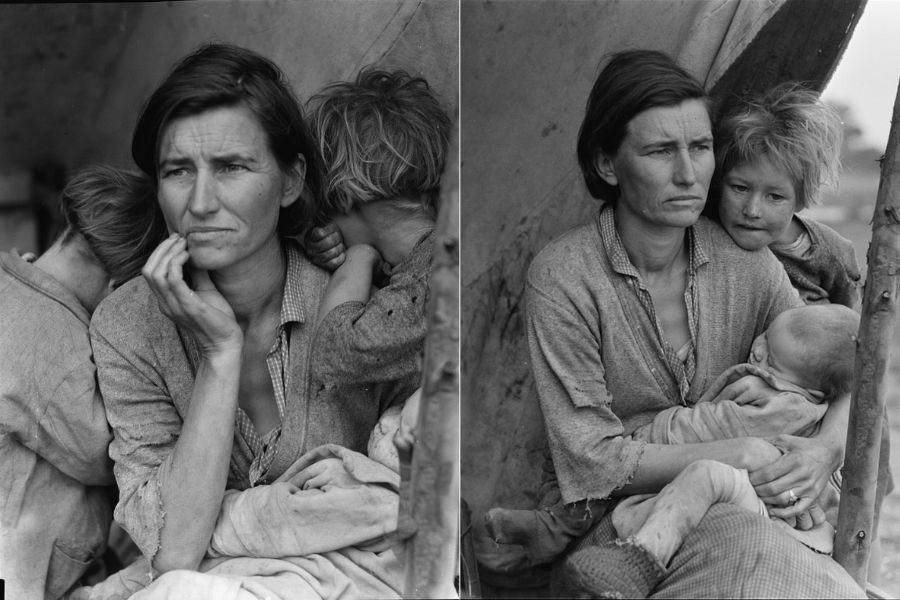
    Photo credit: Photo by Dorothea Lange via Library of CongressThe woman from the famous Great Depression photo didn't know about her fame for 40 years.

    Nearly everyone across the globe knows Florence Owens Thompson’s face from newspapers, magazines, and history books. The young, destitute mother was the face of The Great Depression, her worried, suntanned face looking absolutely defeated as several of her children took comfort by resting on her thin frame. Thompson put a human face and emotion behind the very real struggle of the era, but she wasn’t even aware of her role in helping to bring awareness to the effects of the Great Depression on families.

    It turns out that Dorothea Lange, the photographer responsible for capturing the worry-stricken mother in the now-famous photo titled “Migrant Mother,” told Thompson that the photos wouldn’t be published. Of course, they subsequently were published in the San Francisco News. At the time the photo was taken, Thompson was supposedly only taking respite at the migrant campsite with her seven children after the family car broke down near the campsite. The photo was taken in March 1936 in Nipomo, California when Lange was concluding a month’s long photography excursion documenting migrant farm labor.

    the great depression; Florence Thompson; Mona Lisa of the Great Depression; Mona Lisa; the depression; depression era
    Worried mother and children during the Great Depression era. Photo by Dorothea Lange via Library of Congress

    “Migrant worker” was a term used in the 30s to describe poverty-stricken Americans who moved from town to town harvesting the crops for farmers. The pay was abysmal and not enough to sustain a family, but harvesting was what Thompson knew as she was born and raised in “Indian Territory,” (now Oklahoma) on a farm. Her father was Choctaw and her mother was white. After the death of her husband, Thompson supported her children the best way she knew how: working long hours in the field.

    “I’d hit that cotton field before daylight and stay out there until it got so dark I couldn’t see,” Thompson told NBC in 1979 a few years before her death.

    the great depression; Florence Thompson; Mona Lisa of the Great Depression; Mona Lisa; the depression; depression era
    A mother reflects with her children during the Great Depression. u200bPhoto by Dorthea Lange via Library of Congress

    When talking about meeting Thompson, Lange wrote in her article titled “The Assignment I’ll Never Forget: Migrant Mother,” which appeared in Popular Photography, Feb. 1960, “I saw and approached the hungry and desperate mother, as if drawn by a magnet. I do not remember how I explained my presence or my camera to her, but I do remember she asked me no questions. I made five exposures, working closer and closer from the same direction. I did not ask her name or her history. She told me her age, that she was thirty-two. She said that they had been living on frozen vegetables from the surrounding fields, and birds that the children killed.”

    Lange goes on to surmise that Thompson cooperated because on some level she knew the photos would help, though from Thompson’s account she had no idea the photos would make it to print. Without her knowledge, Thompson became known as “The Dustbowl Mona Lisa,” which didn’t translate into money in the poor family’s pocket. In fact, according to a history buff who goes by @baewatch86 on TikTok, Thompson didn’t find out she was famous until 40 years later after a journalist tracked her down in 1978 to ask how she felt about being a famous face of the depression.

    It turns out Thompson wished her photo had never been taken since she never received any funds for her likeness being used. Baewatch explains, “because Dorothea Lange’s work was funded by the federal government this photo was considered public domain and therefore Mrs. Florence and her family are not entitled to the royalties.”

    While the photo didn’t provide direct financial compensation for Thompson, the virility of it helped to feed migrant farm workers. “When these photos were published, it immediately caught people’s attention. The federal government sent food and other resources to those migrant camps to help the people that were there that were starving, they needed resources and this is the catalyst. This photo was the catalyst to the government intercepting and providing aid to people,” Baewatch shares.

    https://youtube.com/watch?v=SdxZG8KGHw4%3Fsi%3Dzr70YxpU9QkfSiD_

    When Thompson’s health declined with age, people rallied around to help pay her medical bills citing the importance of the 1936 photo in their own lives. The “Migrant Mother” passed away in 1983, just over a week after her 80th birthday. She was buried in California.

    “Florence Leona Thompson, Migrant Mother. A legend of the strength of American motherhood,” her gravestone reads.

  • 10 fascinating facts about Vincent van Gogh and his famous ‘Starry Night’ painting
    Photo credit: CanvaVincent van Gogh is famous for his striking colors and bold brush strokes.
    , ,

    10 fascinating facts about Vincent van Gogh and his famous ‘Starry Night’ painting

    Most of us know bits and pieces about the man and his art, but likely don’t have the full picture.

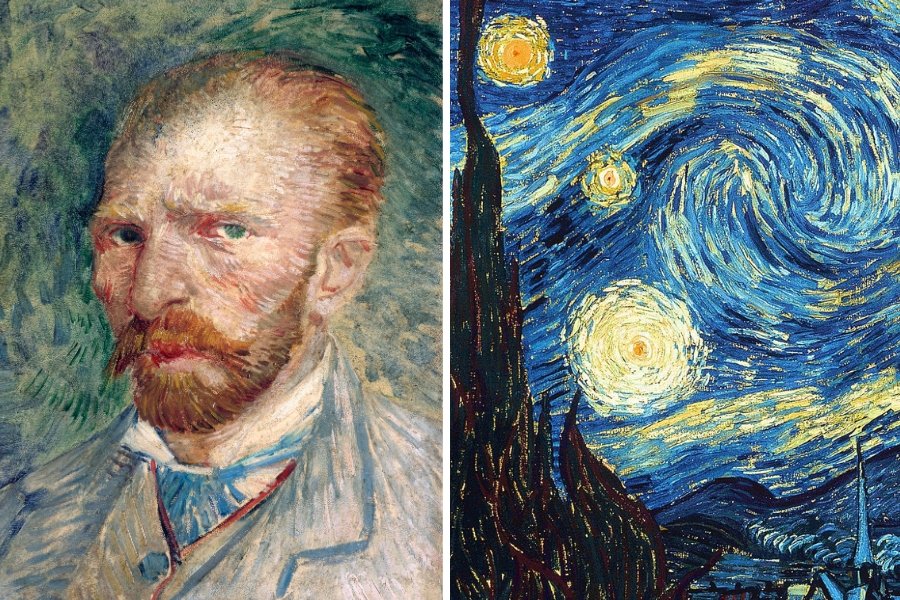
    If you were to ask people to name famous paintings, Vincent van Gogh’s “The Starry Night” would surely be among the top answers. The swirling blue and yellow sky is one of the most recognizable works of Western art, and van Gogh is a household name even among people who aren’t big art connoisseurs.

    Most of us know a little bit about van Gogh due to the dramatic story of him cutting off his own ear. But there’s also a lot of lore and legend ranging in accuracy about the man and his art, so it’s worth doing a dive into some true fascinating facts about both. A video from Great Art Explained provides a concise but comprehensive overview of who he was and how he worked, giving us a bigger picture of the legend as well as his most famous piece.

    Here are some facts the average person might not know about Vincent van Gogh:

    Van Gogh didn’t start painting until his late 20s and only painted for a decade.

    For such a famous artist, van Gogh didn’t paint for very long. He didn’t seriously begin painting until around age 27, but he dedicated himself fully to his art until he died from a self-inflicted gunshot wound to the chest at age 37. Still, his prolific talent was legendary, as he created some 900 paintings, and over 2,000 pieces of art overall, during his decade of work. He had just begun being recognized for his artistic talents when he died, and most of his famous paintings were created in his final two years of life.

    Van Gogh spent time in a mental institution, but it wasn’t your typical asylum experience.

    In 1889, van Gogh was admitted into a mental asylum outside Saint Remy, France. But unlike the overcrowded public mental institutions in large cities, the small asylum only had 41 patients and was run by a progressive doctor who believed in treating mentally ill people with kindness and understanding. Art and nature were seen as healing, and doctors quickly realized that van Gogh wouldn’t survive if he didn’t have the freedom to paint and create. He spent all of his waking hours painting and created many of his most well-known works—including “The Starry Night”—while gazing out his barred asylum window at the beautiful countryside dotted with olive groves and vineyards or wandering the purposefully planted gardens.

    vincent van gogh, painting, art, irises, master
    Van Gogh painted upload.wikimedia.org

    Most of the time, he was perfectly lucid and rational.

    Today, van Gogh would likely be diagnosed with bipolar disorder, and his behavior during manic episodes—like cutting off his own ear and giving it to a prostitute—have planted in people’s minds a picture of van Gogh as a crazed lunatic. However, he was actually lucid and rational most of the time. Not only that, but he was intelligent and extremely well-read, spoke four languages, and had lifelong friends as well as a close relationship with his brother and sister-in-law. The history-defining ear incident was not his usual modus operandi. In fact, the video notes that he was “probably the sanest patient at St. Remy.”

    He also had syphilis.

    This fact can’t really be separated from his mental illness challenges, as syphilis can cause psychiatric problems.

    theo van gogh, vincent van gogh brother, art history, illness, health
    Theo van Gogh, Vincent's younger brother, helped support him throughout his life. Public Domain

    Van Gogh’s brother Theo was his biggest supporter.

    Throughout his life, van Gogh’s younger brother Theo supported him in every way: financially, emotionally, and artistically. An art dealer himself, Theo encouraged his brother to develop his painting skills. Theo paid for Vincent’s treatment at the asylum and was also the one who insisted he be able to paint there. Much of what we know about van Gogh comes from letters he wrote to Theo, and the two shared a close bond. Theo was with Vincent when he died, two days after shooting himself in the chest. Theo, who also had syphilis, would die just six month later from the effects of the disease.

    Van Gogh’s “The Starry Night” was influenced by Japanese art.

    Like many of his Western colleagues at the time, van Gogh was influenced by art from Japan, and many of his paintings reflect elements of Japanese prints. He was an admirer of Hokusai’s “The Great Wave Off Kanagawa,” and it’s not a stretch to see how it may have inspired the swirl pattern and blue colors of “The Starry Night.”

    the great wave, japanes painting, kanagawa, hakusai, van gogh, the starry night
    Hokusai's Photo credit: Canva

    Van Gogh tried to poison himself with paints and turpentine a few weeks before painting “The Starry Night.”

    The bright colors that marked the last five years of van Gogh’s art also nearly took his life. New techniques in creating pigments in paints led to a dramatic shift from dark, brooding paintings to bright, colorful ones as van Gogh entered his peak years. But his mental health also took dramatic turns, and prior to painting “The Starry Night” in 1889, medical notes from the asylum indicate that he drank paint and turpentine as a suicide attempt.

    Van Gogh became very religious but eventually lost his faith in Christianity.

    Van Gogh was raised by a Christian minister father and developed a deep religious faith, even becoming an evangelical preacher himself for a time. But later his relationship with religion morphed into a belief that the divine was expressed in nature, art, and human emotion rather than the church.

    Van Gogh considered “The Starry Night” a failure.

    With his standards for himself set impossibly high, van Gogh felt that many of his paintings were failures, including, apparently, “The Starry Night.” He wrote to fellow painter Emile Bernard several months after painting it, “I have been slaving away on nature the whole year, hardly thinking of impressionism or of this, that and the other. And yet, once again I let myself go reaching for stars that are too big—a new failure—and I have had enough of it.”

    Van Gogh was entirely wrong about his own legacy.

    Less than two months before his suicide in 1890, van Gogh wrote to a critic who had praised his work in a Paris newspaper, “It is absolutely certain that I shall never do important things.” Though he had started to see some success as an artist, there was no inkling that he would become one of the most famous and iconic artists of all time. If he had lived, he might have seen the full recognition of his artistic genius in his lifetime or he may not have. But as it was, he died believing himself to be an insignificant failure.

    There may be many lessons we can glean from van Gogh’s story, but perhaps the biggest is to not discount our own talents, skills, or contributions. Like him, we may not be seeing the full picture.

Health

‘Fear-setting’: How a bestselling author conquers anxiety by writing down worst nightmares

Health

Doctor’s unique ‘4-7-8’ relaxation technique could help you fall asleep on-demand

Joy

Dogs really do have favorite people, and here’s how they decide who it will be

Music

Ethan Hawke puts the ‘Who’s your favorite Beatle?’ debate to bed forever in passionate exchange